
Paradox continues its weekly dives into Victoria 3’s many mechanics with dev diary 41, which focuses on revolutions, their moving parts, and just how bad they can be for your country.
Victoria 3’s revolutions are sparked when you fail to balance the political or economic demands of the different segments of population in your country. The groups that feel wronged will take matters into their own hands which can mean big trouble for your rule, but can also be used to ensure your country comes out of the conflict stronger than before.
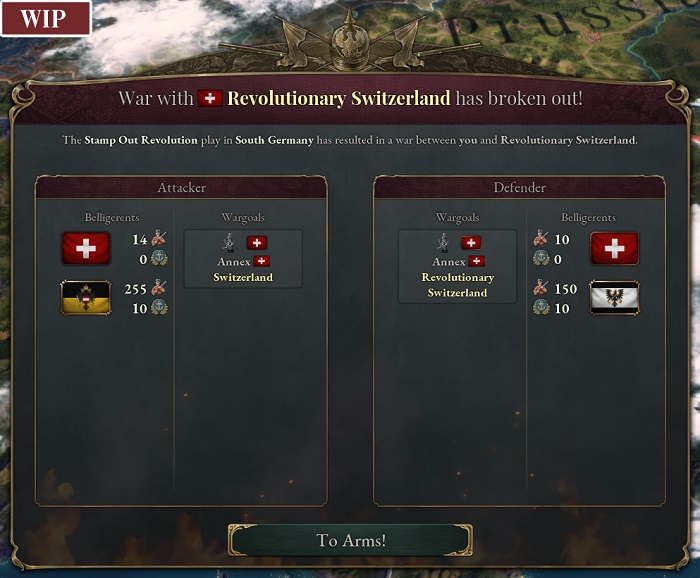
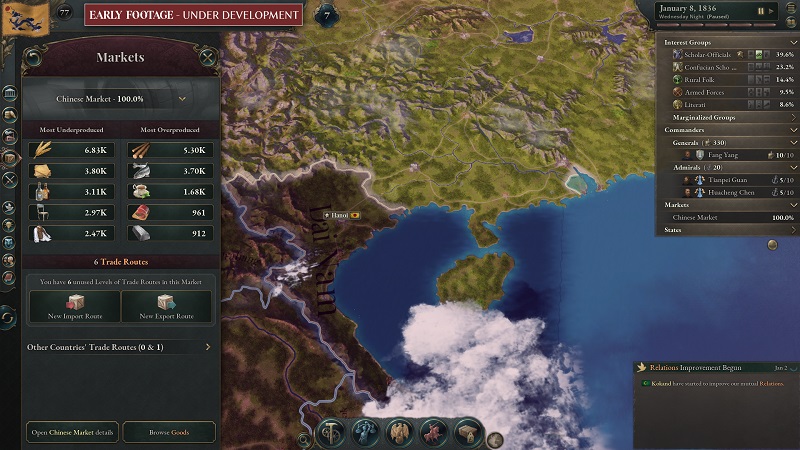
“A design goal we have kept front and center is that outright armed uprisings should be rare but still feel threatening. There is a lot of foreshadowing and opportunity to course-correct or compensate if you want to avoid a revolution,” reads dev diary 41. “Not all movements will actually be powerful or angry enough to pose a real threat to you, and if they aren’t, they won’t drag you into a pointless war with an obvious outcome but bide their time until they become relevant.”
Victoria 3’s revolutions begin with a political movement demanding changes to the country’s laws. This can mean that it wants something new enacted, something you’re about to change preserved, or something restored.
Keeping an eye on the Support and Radicalism attributes of dangerous political movements informs you of how strong their efforts will be.
“A movement with strong Support and high Radicalism is of course very dangerous. A movement with strong Support but low Radicalism can be a nuisance but is relatively harmless: they’ll work within the system, maybe raise a placard or two, but won’t take up arms.”
You will have tools to stop a revolution from turning into a costly armed conflict which, depending on its length, can force the winning side to spend decades rebuilding what’s left of the country.
The most straightforward way is to give in to the political movement’s demands. You can also deradicalize those who aren’t happy with you by improving their living conditions but also suppress them.
Establishing a Home Affairs Institution can also help you keep things in order, allowing for more political maneouvering. The National Guard involves taking “more overt, proactive steps to keep law and order.” A Secret Police “is able to operate more effectively in the background.”
Victoria 3’s revolutions have their own type of diplomatic play attached to them, which also allows other countries whose interest align with either the loyalists or the revolutionaries to join.
You can read more about the mechanic in dev diary 41, by following the link above, or learn about the game’s states and interest groups.
Keep updated on the latest PC Gaming news by following GameWatcher on Twitter, checking out our videos on YouTube, giving us a like on Facebook, and joining us on Discord. We may also include links to affiliate stores, which gives us a small commission if you purchase anything via them. Thank you.