
The big name publishers and studios are taking the wait-and-see route, fearful it could go the way of 3D where a big noise was made about it but then it just fizzled out much to embarrassment.
Who could blame them? We consumers are a fickle bunch, but virtual reality headgear occupies an odd space between looking silly and total immersion games.
”For the most part, developers are serious enthusiasts, some companies are startups or independent and are willing to take a leap of faith on VR,” Iribe told Gamasutra. ”But a lot of the bigger companies are looking at it saying, ‘probably VR is going to work, probably it’s going to be a good thing. Maybe it’s going to be Oculus, maybe it’s going to be one of the established guys.’” Of course the company has VR aspirations well beyond video games.
What if you could have an entire movie theatre experience packed into your pocket? ”Real estate, medical, architecture, movies – how long will move theatres be around if you have an IMAX in sunglasses in your pocket? I think that’s going to happen faster than people are expecting,” continued the CEO.
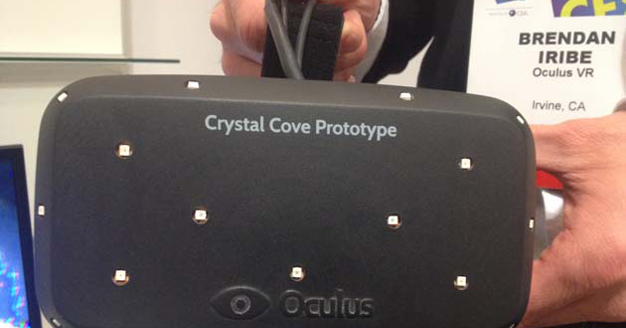
”We’ve moved this fast – last CES we had a duct-taped prototype, and had a lot of motion blur. A year later, we’ve solved most of the big hard problems. This is going to get incredibly good, incredibly fast, and it is going to apply to a lot of other markets.” It’s unlikely that TV or movie theatres will go away but VR is another category starting to insert itself and it’s ”going to capture a lot of users and a lot of attention.”
”…This might be bold to say, but I really do believe people will look back at 2013 and 2014 as a moment when virtual reality first worked – when we realized that we had a version of VR good enough to go mass market, and kick off a whole space,” added Iribe. Consumer models for Oculus Rift are due this year thanks to an extra $75 million in funding.